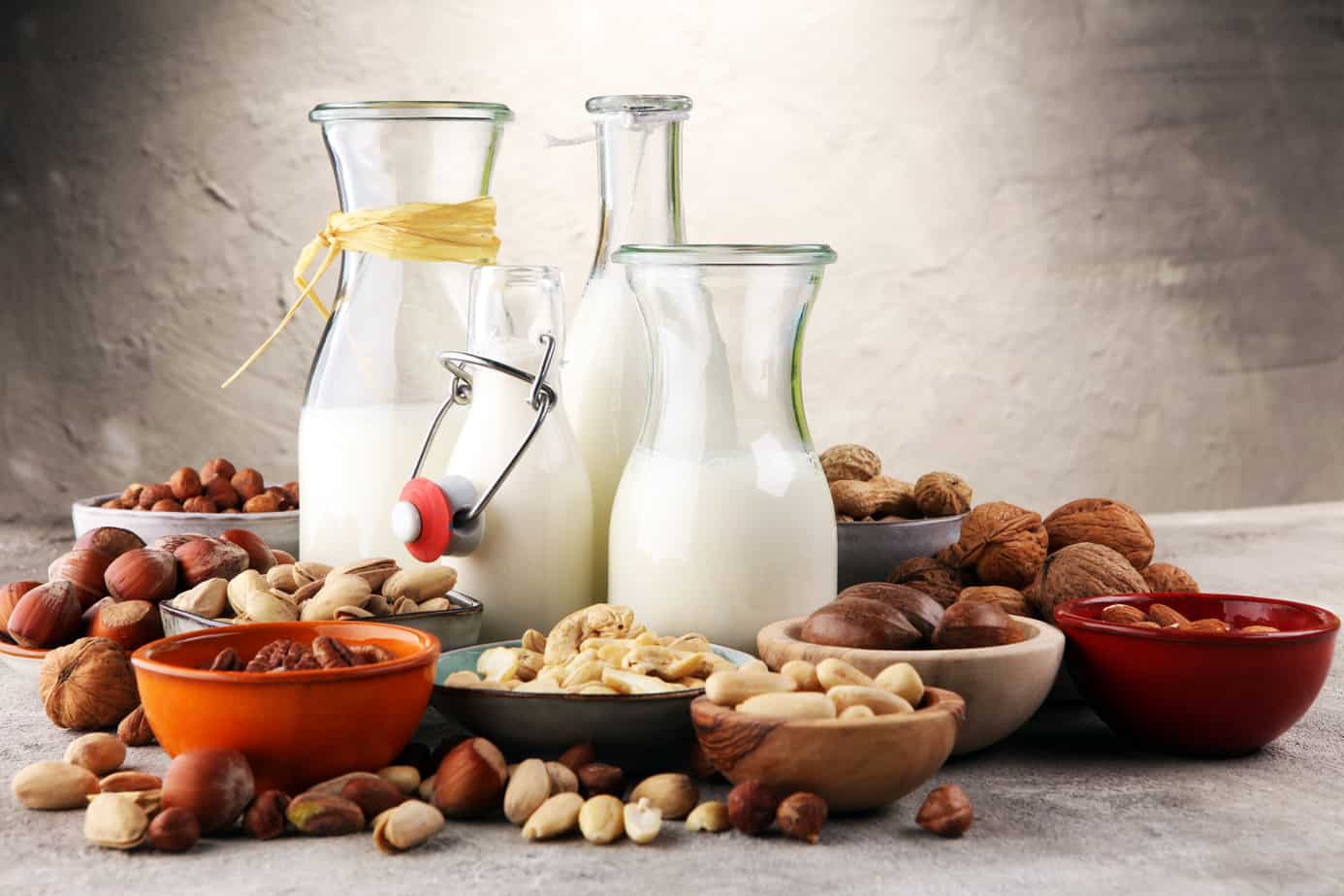
The lowest carb milks are the unsweetened plant milks: almond, coconut (from a carton), flax, and macadamia all land around 1 gram of net carbs per cup, and unsweetened pea protein milk is close at 0 to 1 gram. Regular cow’s milk, by contrast, has about 12 grams of carbs per cup, whether it is whole, 2%, or skim, which is enough to eat up most of a day’s keto budget in one glass. So plain dairy milk does not fit keto, but the swaps below do.
The reason milk trips people up is lactose, the natural sugar in dairy. Cheese, butter, and cream lose most of that sugar in processing, which is why they stay keto friendly, but a cup of milk keeps all 12 grams. This guide names the milks that work, the ones that do not, and a heavy cream trick that mimics whole milk almost exactly.
Low Carb Milk Comparison Chart
All numbers are per 1 cup (240 ml) and rounded to the label, using unsweetened versions of the plant milks.
| Milk / Alternative | Net carbs | Protein | Calories | Keto verdict |
|---|---|---|---|---|
| Whole cow’s milk | 12 g | 8 g | 150 | No |
| 2% milk | 12 g | 8 g | 120 | No |
| Skim milk | 12 g | 8 g | 90 | No |
| Lactose-free milk | 12 g | 8 g | 110 | No |
| Half and half | 10 g | 7 g | 315 | Small splashes only |
| Heavy cream + water (DIY) | 2 g | 2 g | 100 | Yes |
| Unsweetened almond milk | 1 g | 1 g | 30 | Yes |
| Coconut milk (carton) | 1 g | 0 g | 45 | Yes |
| Unsweetened macadamia milk | 1 g | 1 g | 55 | Yes |
| Unsweetened flax milk | 1 g | 0 g | 25 | Yes |
| Unsweetened soy milk | 3 g | 7 g | 80 | Yes, in moderation |
| Oat milk | 16 g | 3 g | 120 | No |
| Rice milk | 22 g | 1 g | 120 | No |
| Unsweetened pea protein milk | 1 g | 8 g | 80 | Yes |
Is Cow’s Milk Keto?
No. Whole, 2%, and skim milk all carry about 12 grams of carbs per cup because they all keep the same lactose load. Lower fat does not mean lower carb here, and skim actually delivers those carbs with almost no fat to slow them down. A single glass can put you near or over a strict 20 gram daily limit.
Lactose-free milk is the same story. Manufacturers add the enzyme lactase to pre-digest the lactose, but that just splits it into glucose and galactose. The carb count does not change, and those simpler sugars hit your bloodstream even faster. If you want a dairy taste, look instead at ultra-filtered milks like Fairlife or Kroger Carbmaster, which run about 3 to 6 grams of carbs per cup, or read more in our guide on whether you can have milk on keto.
The Best Keto Milk Options
Unsweetened almond milk
Almond milk is the most popular keto swap for good reason. At roughly 1 gram of net carbs and 30 calories per cup, it is the lightest option on the shelf and works in coffee, smoothies, and cereal. The flavor is mild and slightly nutty, and it stays thin rather than creamy, so it behaves more like skim than whole milk. It also bakes well in muffins and pancakes. For a deeper look, see our full breakdown of almond milk on keto.
Unsweetened macadamia milk
If you miss the richness of whole milk, macadamia milk is the closest plant option. It has about 1 gram of net carbs but a creamier, fuller mouthfeel than almond, and it froths well for lattes. It costs more and is harder to find, but it is the top choice for coffee drinkers who want body without dairy.
Coconut milk (from a carton)
Carton coconut milk, the drinkable kind, runs about 1 to 2 grams of net carbs per cup and adds a light coconut flavor that suits smoothies, curries, and baking. Do not confuse it with canned coconut milk, which is far higher in fat and calories and meant for cooking, not pouring. Check the label, since a few brands sneak in up to 5 grams of net carbs.
Unsweetened flax milk
Flax milk is the lightest of all at about 25 calories and 1 gram of net carbs per cup, with a clean, neutral taste. It has almost no protein, but it delivers omega-3 fats and works nicely over cereal or in coffee for anyone who finds almond milk too nutty.
Unsweetened soy and pea protein milk
These are the high-protein picks. Unsweetened soy milk has about 3 grams of net carbs and 7 grams of protein per cup, and unsweetened pea protein milk (such as Ripple) offers 0 to 1 gram of carbs with 8 grams of protein. Both are the closest plant milks to dairy in protein content, which makes them useful post-workout or in protein shakes. Keep soy to moderate amounts since the carbs are slightly higher.
The Heavy Cream and Water Trick
The single best whole-milk substitute for keto is not a carton at all. Mix 1 part heavy cream with 3 parts water and you get a liquid that looks, pours, and tastes remarkably like whole milk, at roughly 2 grams of net carbs per cup instead of 12.
To make one cup, stir 1/4 cup heavy cream into 3/4 cup water. Adjust the ratio for the richness you want: more water for something skim-like, less for a creamier pour. This works in coffee, tea, baking, and any recipe that calls for milk, and it keeps in the fridge for a few days. Because heavy cream is nearly pure fat, the carbs stay low while the fat keeps you in ketosis. Our guide on what cream you can have on keto covers the cream options in more detail.
Half and half is a ready-made shortcut for coffee. It has more carbs than cream, about 10 grams per cup, but you rarely use a full cup. A tablespoon or two adds under 1 gram, so a splash in your morning coffee is fine.
Watch the Sweetened Versions
The biggest carb trap in this aisle is the sweetened plant milk. “Original” and “vanilla” almond milk are almost always sweetened, and they jump to about 15 to 16 grams of carbs per cup, mostly added cane sugar. That is the same as regular cow’s milk and will knock you out of ketosis just as fast.
Always look for the word “unsweetened” on the carton, and confirm the sugar line reads 0 to 1 gram. The same warning applies to sweetened coconut, soy, and oat milks. A milk being plant-based tells you nothing about its carbs until you check for added sugar.
Milks to Skip on Keto
Oat milk and rice milk are made from grains, so they are high in carbs by nature. Oat milk lands around 15 to 20 grams of net carbs per cup and rice milk near 22 grams, even in unsweetened form. No portion small enough to matter will still taste like milk, so leave both off the list. Sweetened condensed milk and evaporated milk are also out, since they concentrate the sugar even further.
Cooking and Baking Substitutions
Swapping milk in recipes is straightforward once you know how each option behaves:
- Coffee and tea: heavy cream diluted with water, half and half, or macadamia milk.
- Baking (muffins, pancakes, quick breads): unsweetened almond or the cream-and-water mix, cup for cup.
- Smoothies: coconut or almond milk for lightness, pea protein milk for extra protein.
- Cream sauces and soups: heavy cream straight, thinned with a little water or broth if needed.
- Cereal and overnight chia: unsweetened almond or flax milk.
For most one-to-one swaps, unsweetened almond milk or the cream-and-water blend will carry the recipe without changing the carb math. Save canned coconut milk and straight heavy cream for dishes where you actually want the extra fat and body.
The Bottom Line
Regular cow’s milk does not fit keto at about 12 grams of carbs per cup, and lactose-free milk is no better. The winners are the unsweetened plant milks at roughly 1 gram per cup, with almond as the everyday default, macadamia for richness, and pea or soy when you want protein. For anything that needs to taste like real whole milk, dilute heavy cream with water. Just remember to check every label for added sugar before it goes in your cart.