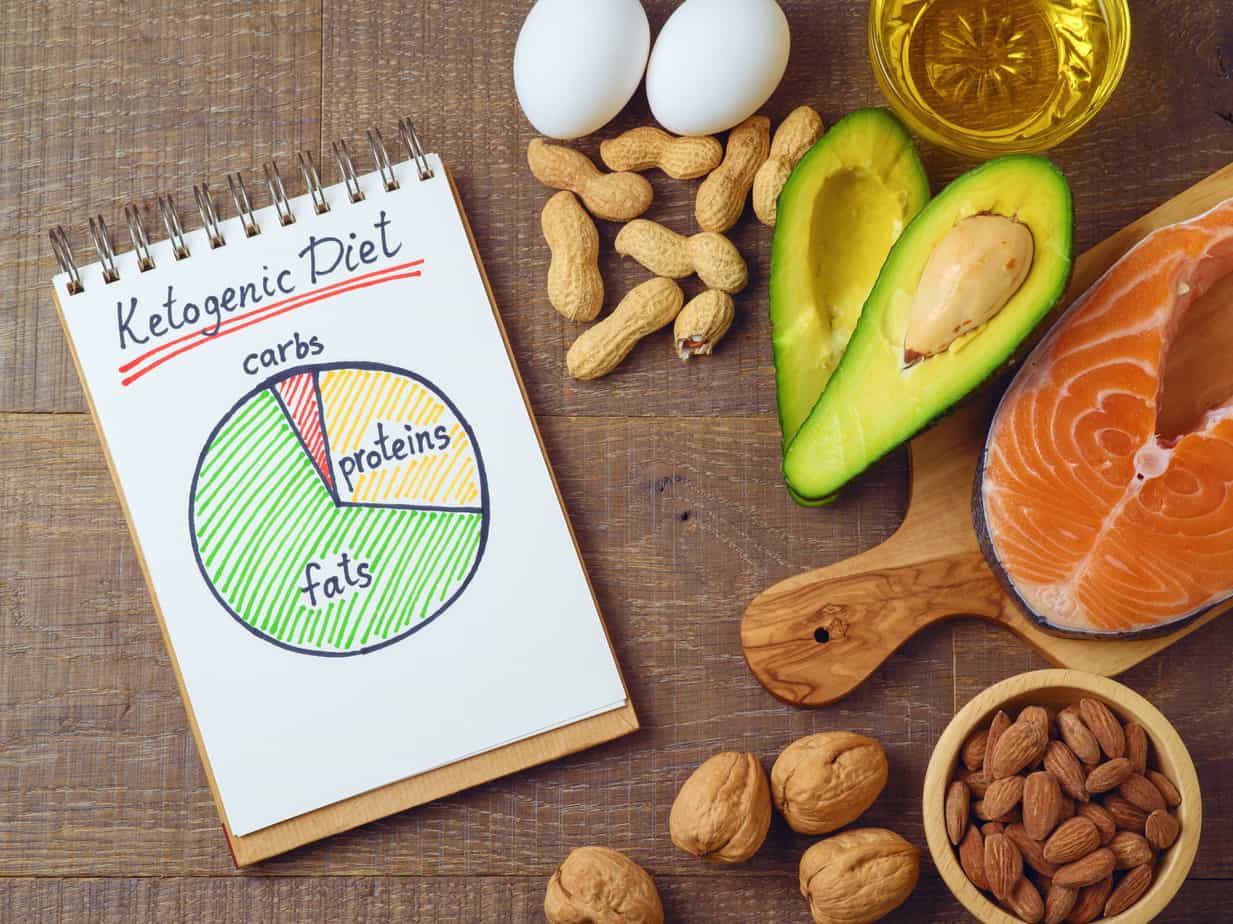
On keto you eat meat, fish, eggs, cheese, non-starchy vegetables, nuts, and healthy fats, while keeping total net carbs under 20 to 50 grams per day. Everything you cut out (bread, rice, sugar, potatoes, and most fruit) gets replaced by whole foods that are naturally high in fat and protein and very low in carbohydrate.
Use this page as your master reference. Each category below has a net-carb table so you can see at a glance how much of a food fits your daily budget, followed by a clearly separated list of what to avoid and a short printable list you can screenshot for the grocery store. If you want these foods turned into actual meals, pair this list with our keto meal plan.
How to read this list
Two numbers matter on keto: your daily net-carb limit and the net carbs in each food. Net carbs are total carbohydrates minus fiber (and minus sugar alcohols like erythritol, which the body does not fully absorb). A food with 5 grams of total carbs and 3 grams of fiber only costs you 2 grams of net carbs.
Aim for one of these daily targets:
- 20 to 25 grams net carbs: strict keto, fastest path into ketosis
- 25 to 50 grams net carbs: moderate keto, easier to maintain long term
The serving sizes below are realistic portions, and all net-carb figures are rounded conservatively from USDA data. Where a food is borderline, the notes column tells you to watch your portion.
Proteins: meat, poultry, fish, and eggs
Protein is the backbone of every keto plate. Fresh, unprocessed meat, poultry, fish, and eggs contain essentially zero carbs, so you can build meals around them without doing any math. The only place carbs sneak in is processed and breaded products, so check labels on bacon, sausage, and deli meat for added sugar and fillers.
| Food | Serving | Net carbs | Notes |
|---|---|---|---|
| Beef (ribeye, ground, steak) | 4 oz | 0 g | Fattier cuts are ideal on keto |
| Chicken (thigh, breast, wings) | 4 oz | 0 g | Skin-on adds fat, no carbs |
| Pork (chop, loin, shoulder) | 4 oz | 0 g | Very keto-friendly |
| Lamb | 4 oz | 0 g | Grass-fed if available |
| Bacon | 2 slices | 0 g | Choose no-sugar-added brands |
| Sausage | 1 link | 0 to 1 g | Check for sugar and starch fillers |
| Deli meat | 2 oz | 1 to 2 g | Avoid honey-glazed or breaded |
| Salmon | 4 oz | 0 g | High in omega-3 fats |
| Tuna | 4 oz | 0 g | Fresh or canned in water/oil |
| Shrimp | 4 oz | 0 to 1 g | Lean, quick keto protein |
| Sardines | 1 can | 0 g | Great fat-to-protein ratio |
| Eggs | 1 large | 0.4 g | The perfect keto food |
Fatty fish and shellfish deserve special attention because they add omega-3s alongside protein. For a deeper breakdown of which options work best, see our guide to keto-friendly seafood. And if you love breakfast meats, our look at how much bacon you can eat on keto covers the fat-and-sodium tradeoffs.
Fats and oils
Fat is your primary fuel on keto, so this category is where you get most of your calories. Pure fats and oils contain zero carbs, which makes them a free ingredient for cooking, dressing, and adding satiety to a meal.
| Food | Serving | Net carbs | Notes |
|---|---|---|---|
| Extra virgin olive oil | 1 tbsp | 0 g | Best for dressings and low heat |
| Avocado oil | 1 tbsp | 0 g | High smoke point for frying |
| Coconut oil | 1 tbsp | 0 g | Contains MCTs |
| Butter | 1 tbsp | 0 g | Grass-fed preferred |
| Ghee | 1 tbsp | 0 g | Clarified, lactose-free |
| MCT oil | 1 tbsp | 0 g | Rapidly converts to ketones |
| Lard and tallow | 1 tbsp | 0 g | Traditional cooking fats |
| Mayonnaise | 1 tbsp | 0 to 1 g | Avocado-oil versions are cleanest |
MCT oil is a favorite because it converts to ketones faster than other fats. If you are new to it, read our guide on how much MCT oil to take per day so you can avoid the digestive surprises that come with too much too soon.
Vegetables
Vegetables are where most beginners get tripped up, because the rule is not “vegetables are healthy” but “which vegetables are low in carbs.” The simplest shortcut: things that grow above ground (leafy greens, cruciferous vegetables, squash) are almost always keto-friendly, while things that grow below ground (potatoes, carrots, beets, parsnips) tend to be starchy and high in carbs. The numbers below are per one cup unless noted.
| Vegetable | Serving | Net carbs | Notes |
|---|---|---|---|
| Spinach (raw) | 1 cup | 0.4 g | Eat freely |
| Romaine and leafy lettuce | 1 cup | 0.5 g | Salad base |
| Arugula | 1 cup | 0.4 g | Peppery green |
| Kale | 1 cup | 1.4 g | Nutrient dense |
| Celery | 1 cup | 1.2 g | Great with fat dips |
| Mushrooms | 1 cup | 1.6 g | Umami and low carb |
| Cabbage | 1 cup | 2.2 g | Shred for slaw |
| Cucumber | 1 cup | 2 g | Refreshing, above ground |
| Zucchini | 1 cup | 2.4 g | Spiralize for pasta |
| Asparagus | 1 cup | 2.4 g | Roast in butter |
| Cauliflower | 1 cup | 3 g | Rice or mash substitute |
| Broccoli | 1 cup | 3.6 g | Cruciferous staple |
| Green beans | 1 cup | 4 g | Above ground, moderate |
| Bell peppers | 1 cup | 4.5 g | Red are sweeter than green |
| Brussels sprouts | 1 cup | 4.6 g | Roast with bacon |
| Onion | 1/2 cup | 4 g | Use as a flavor accent |
| Carrots | 1 medium | 4.5 g | Root vegetable, limit portions |
| Tomato | 1 medium | 3.2 g | Technically a fruit, use sparingly |
Leafy greens and above-ground vegetables can be eaten in generous amounts. The borderline ones (onions, carrots, tomatoes) are best treated as flavor accents rather than the bulk of a dish. Carrots are the classic example of a vegetable most people assume is diet food but is actually too sugary in large portions, which we cover in detail in are carrots keto.
Dairy
Full-fat dairy fits keto beautifully because the fat is the point and the carb counts are low. Stick to full-fat versions, since low-fat and fat-free products replace the fat with more lactose sugar. Hard aged cheeses have the fewest carbs; milk and sweetened yogurt have the most.
| Food | Serving | Net carbs | Notes |
|---|---|---|---|
| Butter | 1 tbsp | 0 g | Basically a pure fat |
| Cheddar cheese | 1 oz | 0.4 g | Aged cheeses are lowest |
| Mozzarella | 1 oz | 0.6 g | Melts well for keto pizza |
| Parmesan | 1 oz | 0.9 g | Sprinkle liberally |
| Cream cheese | 1 oz | 1.6 g | Base for many keto recipes |
| Heavy cream | 1 tbsp | 0.4 g | For coffee and sauces |
| Full-fat Greek yogurt (plain) | 1/2 cup | 3.5 g | Unsweetened only |
| Cottage cheese (full-fat) | 1/2 cup | 4 g | Watch portion size |
| Whole milk | 1 cup | 12 g | Too high, use sparingly |
Cheese is one of the most versatile keto foods, and our guide to eating cheese on keto ranks the best and worst options. Yogurt is trickier because most flavored tubs are loaded with sugar, so read can you eat yogurt on keto before you buy. Regular cow’s milk is the one dairy product to limit, since a single cup carries about 12 grams of carbs.
Nuts and seeds
Nuts and seeds are excellent for snacking and adding crunch, but they are not all equal. Macadamias and pecans are the lowest in carbs and highest in fat, making them the gold standard. Cashews and pistachios are much starchier and easy to overeat, so treat them as occasional rather than daily foods. Portions below are per one ounce (a small handful).
| Food | Serving | Net carbs | Notes |
|---|---|---|---|
| Macadamia nuts | 1 oz | 1.5 g | Highest fat, lowest carb |
| Pecans | 1 oz | 1.2 g | Great in fat bombs |
| Brazil nuts | 1 oz | 1.3 g | Rich in selenium |
| Walnuts | 1 oz | 2 g | Omega-3 source |
| Hazelnuts | 1 oz | 2 g | Pairs with cocoa |
| Almonds | 1 oz | 2.6 g | Versatile, also as flour |
| Flaxseed (ground) | 1 oz | 0.4 g | High fiber |
| Chia seeds | 1 oz | 2 g | For puddings |
| Pumpkin seeds | 1 oz | 2 g | Crunchy salad topper |
| Sunflower seeds | 1 oz | 3.2 g | Moderate, watch portions |
| Pistachios | 1 oz | 5 g | Higher carb, limit |
| Cashews | 1 oz | 7.7 g | Too starchy, avoid |
| Peanut butter (natural) | 2 tbsp | 4 g | No added sugar |
For a ranked breakdown of the best options by carb count, see our guide to the best keto nuts. Nut butters are a great high-fat snack as long as they have no added sugar, which we cover in what nut butters are keto-friendly.
Fruits
This is the shortest food group on keto, because most fruit is essentially candy from a tree. The keto-safe fruits are avocados, olives, and small portions of berries. Everything else (bananas, apples, grapes, mango, pineapple) is too high in sugar to fit a ketogenic carb budget.
| Fruit | Serving | Net carbs | Notes |
|---|---|---|---|
| Avocado | 1/2 fruit | 1.5 g | Mostly fat, keto superstar |
| Olives | 1 oz | 0.5 g | Salty fat source |
| Blackberries | 1/2 cup | 3.1 g | Lowest-carb berry |
| Raspberries | 1/2 cup | 3.3 g | High fiber |
| Strawberries | 1/2 cup | 3.3 g | Sliced over cream |
| Lemon or lime juice | 1 tbsp | 1 g | For flavor only |
| Coconut (unsweetened) | 1 oz | 2 g | Flakes or meat |
| Blueberries | 1/2 cup | 8.9 g | Higher carb, small portions |
Avocado is the standout here: technically a fruit, but almost pure fat, which is why it earns its own deep dive in can you eat avocado on keto. Berries are the treat you can occasionally afford, while the everyday fruits most people miss (like apples) simply do not fit, as explained in can you eat apples on keto.
Sweeteners
You do not have to give up sweetness on keto, you just have to switch to sweeteners that do not spike blood sugar. The best options add zero net carbs because the body does not metabolize them the way it does sugar.
| Sweetener | Serving | Net carbs | Notes |
|---|---|---|---|
| Erythritol | 1 tsp | 0 g | Most popular keto sweetener |
| Monk fruit | 1 tsp | 0 g | Natural, no aftertaste |
| Stevia | 1 tsp | 0 g | Very concentrated |
| Allulose | 1 tsp | 0 g | Tastes and browns like sugar |
| Xylitol | 1 tsp | ~3 g | Some effect, toxic to dogs |
Erythritol, monk fruit, stevia, and allulose are the four workhorses of keto baking and coffee. Avoid anything labeled “sugar,” “cane juice,” “honey,” “agave,” or “maple syrup,” and keep an eye on your total intake using our guide to how much sugar you can have on keto.
Condiments and pantry staples
Condiments are a hidden carb trap because sauces are often sweetened. Stick to the fat-based and vinegar-based options below, and use keto flours in place of wheat flour for baking.
| Item | Serving | Net carbs | Notes |
|---|---|---|---|
| Mustard | 1 tsp | 0 g | Free flavor |
| Mayonnaise | 1 tbsp | 0 to 1 g | Fat-based, keto-friendly |
| Hot sauce | 1 tsp | 0 g | Check for sugar |
| Apple cider vinegar | 1 tbsp | 0 g | For dressings |
| Soy sauce or tamari | 1 tbsp | 1 g | Tamari is gluten-free |
| Ranch dressing | 2 tbsp | 1 to 2 g | Full-fat versions only |
| Almond flour | 1/4 cup | 3 g | Wheat flour replacement |
| Coconut flour | 2 tbsp | 3 g | Very absorbent, use less |
| Cocoa powder (unsweetened) | 1 tbsp | 1 g | For keto chocolate |
| Pork rinds | 1 oz | 0 g | Zero-carb chip and breading |
| Bone broth | 1 cup | 0 to 1 g | Electrolytes and collagen |
Salad dressings are the single sneakiest category, since even “healthy” bottles are often sweetened. Our guide to keto salad dressings sorts the safe from the sugary. For baking, swapping wheat flour for almond or coconut flour keeps carbs low without giving up bread and treats.
Drinks
Water is your best friend on keto, and hydration matters even more than usual because your body sheds water and electrolytes in the first weeks. Keep drinks unsweetened and you have plenty of choices.
| Drink | Serving | Net carbs | Notes |
|---|---|---|---|
| Water | any | 0 g | Add salt or electrolytes |
| Black coffee | 1 cup | 0 g | No sugar |
| Tea (black, green, herbal) | 1 cup | 0 g | Unsweetened |
| Sparkling water | 1 can | 0 g | Plain or naturally flavored |
| Unsweetened almond milk | 1 cup | 1 g | Dairy milk substitute |
| Unsweetened coconut milk | 1 cup | 1 to 2 g | Creamy, low carb |
| Diet soda | 1 can | 0 g | Occasional, artificially sweetened |
Coffee is fully keto as long as you skip the sugar, and our guide on coffee on keto covers how to add fat with cream or butter. Regular dairy milk is too high in carbs, so reach for the low-carb milk alternatives like unsweetened almond or coconut milk. If you drink alcohol, stick to spirits and dry wine and read our breakdown of alcohol on keto first.
Foods to avoid on keto
These are the foods that will knock you out of ketosis fastest. The carb counts show exactly why: many of them use up your entire daily budget in a single serving. Cut these out, and the rest of keto becomes much easier.
| Food to avoid | Serving | Net carbs | Category |
|---|---|---|---|
| White bread | 1 slice | 13 g | Grain |
| White rice | 1 cup cooked | 45 g | Grain |
| Pasta | 1 cup cooked | 43 g | Grain |
| Oatmeal | 1 cup cooked | 21 g | Grain |
| Breakfast cereal | 1 cup | 20 to 25 g | Grain |
| Sugar (white) | 1 tbsp | 12 g | Sugar |
| Honey | 1 tbsp | 17 g | Sugar |
| White potato | 1 medium | 33 g | Starchy vegetable |
| Sweet potato | 1 medium | 20 g | Starchy vegetable |
| Corn | 1 cup | 32 g | Starchy vegetable |
| Black beans | 1/2 cup | 13 g | Legume |
| Banana | 1 medium | 24 g | Fruit |
| Apple | 1 medium | 21 g | Fruit |
| Orange juice | 1 cup | 25 g | Sugary drink |
The pattern is clear: grains, sugar, starchy roots, legumes, and sweet fruit are the five families to skip. Notice that one banana or a single cup of rice can exceed an entire strict-keto day. Cereal is a particular trap because it feels like a light breakfast, but as what cereal you can have on keto explains, standard boxes are almost pure carbohydrate. Beans and lentils are healthy in general but too starchy here, which we cover in can you eat beans on keto.
Printable keto food list
Screenshot this section for the grocery store. These are the everyday staples to fill your cart with, grouped for quick scanning. For a fuller pantry-stocking rundown, see our list of keto staples.
Proteins
- Beef, pork, chicken, lamb
- Bacon and no-sugar sausage
- Salmon, tuna, shrimp, sardines
- Eggs
Fats and oils
- Olive oil, avocado oil, coconut oil
- Butter and ghee
- MCT oil
- Mayonnaise (avocado oil)
Vegetables
- Spinach, lettuce, arugula, kale
- Zucchini, cucumber, celery
- Broccoli, cauliflower, asparagus
- Bell peppers, green beans, mushrooms
Dairy
- Cheddar, mozzarella, parmesan
- Cream cheese and heavy cream
- Full-fat plain Greek yogurt
- Butter
Nuts and seeds
- Macadamias, pecans, walnuts, almonds
- Chia, flax, pumpkin seeds
- Natural nut butter (no added sugar)
Fruits
- Avocados and olives
- Raspberries, blackberries, strawberries
Sweeteners and pantry
- Erythritol, monk fruit, stevia, allulose
- Almond flour and coconut flour
- Pork rinds and bone broth
- Mustard, mayo, hot sauce, vinegar
Drinks
- Water and sparkling water
- Black coffee and tea
- Unsweetened almond or coconut milk
Keep this list handy, aim for 20 to 50 grams of net carbs a day, and lean on the linked guides whenever you hit a food you are unsure about. Once you are comfortable with what to buy, turn these ingredients into a full week of meals with our keto meal plan.
Related planning tools
Turn your choices into the weekly grocery checklist or compare equal weights with the food portion tool.